Alibaba's 2.4-trillion-parameter flagship is available on Qubrid AI from day zero. Here is the full benchmark breakdown, the honest read on what the numbers mean, Qwen 3.8 Max pricing, and production-ready integration code.

Shubham Tribedi
Run Moonshot AI's Kimi K3 inside Hermes Agent using Qubrid's OpenAI-compatible API. Full setup, code examples, pricing ($3/M input), and vision support. Live in 10 minutes
Shubham Tribedi
Moonshot AI just launched Kimi K3, and it is a big one. Literally. At 2.8 trillion parameters, K3 is the largest open model ever released, and it ships with a 1 million token context window, native visual understanding, and always-on reasoning.
Shubham Tribedi
Grok 4.5 launched at $2/$6 per million tokens. xAI's own charts show open-source GLM-5.2 just 2.6 points behind on SWE Bench Pro. Full comparison inside.
Shubham Tribedi
Qubrid AI is now officially listed on the Dify Marketplace, giving Dify's developer community direct, OpenAI-compatible access to Qubrid's model catalog inside any chat app, agent, or workflow. No custom integration, no separate infrastructure to stand up. Install the plugin, connect an API key, and Qubrid's models are available wherever Dify builds.
Shubham Tribedi
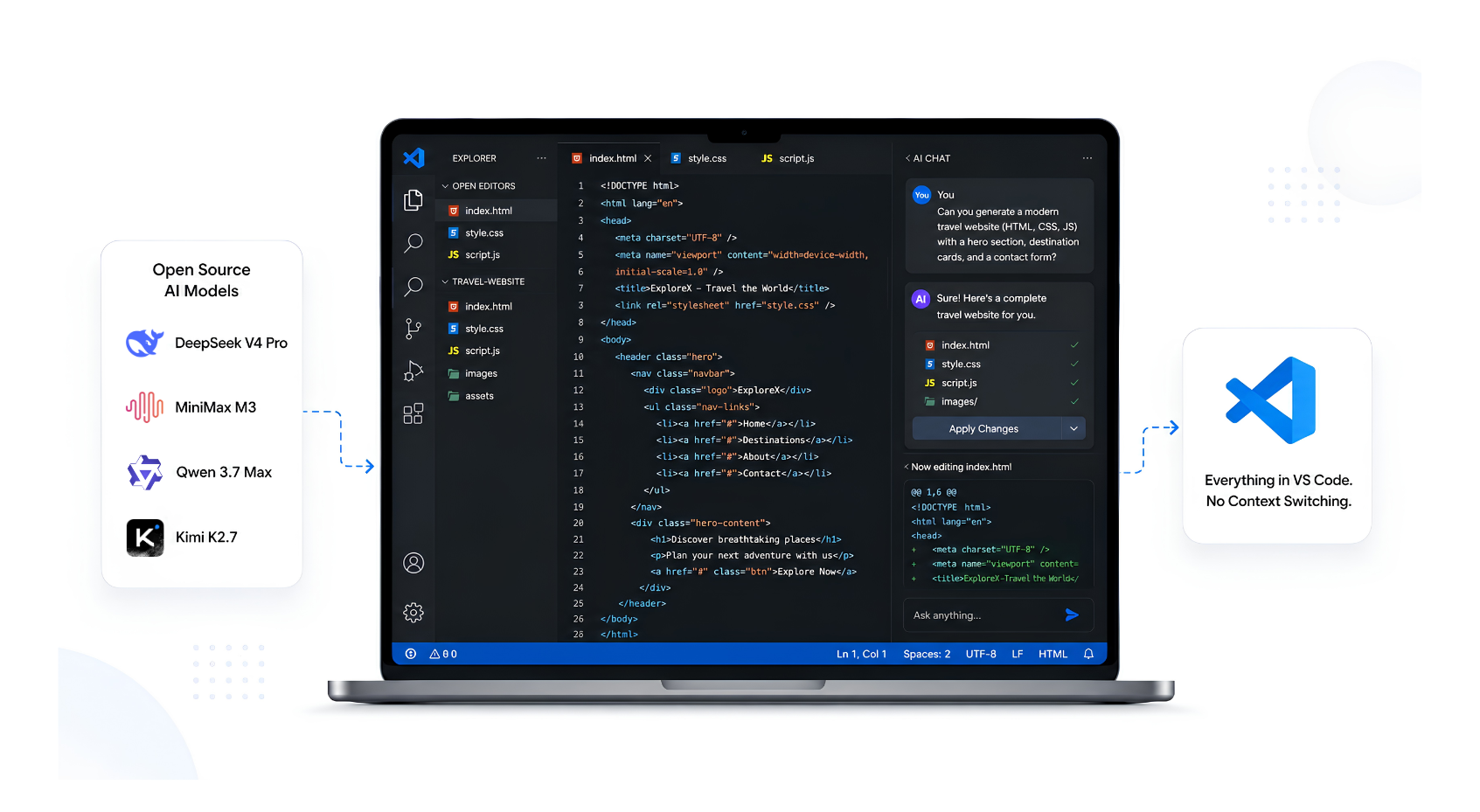
Stop context-switching between your editor and AI chat tools. Here's how to run open source models like GLM-5.2, DeepSeek, and Llama 4 natively inside VS Code using Qubrid's inference API
Shubham Tribedi
GLM-5.2 just claimed the top spot among open-weights models, beating GPT-5.5 on coding benchmarks, matching Claude Opus 4.8 on long-horizon tasks, and doing it all at a fraction of the cost. Qubrid AI is a Day 0 launch partner with Z.ai - which means you can build with it right now.
Shubham Tribedi
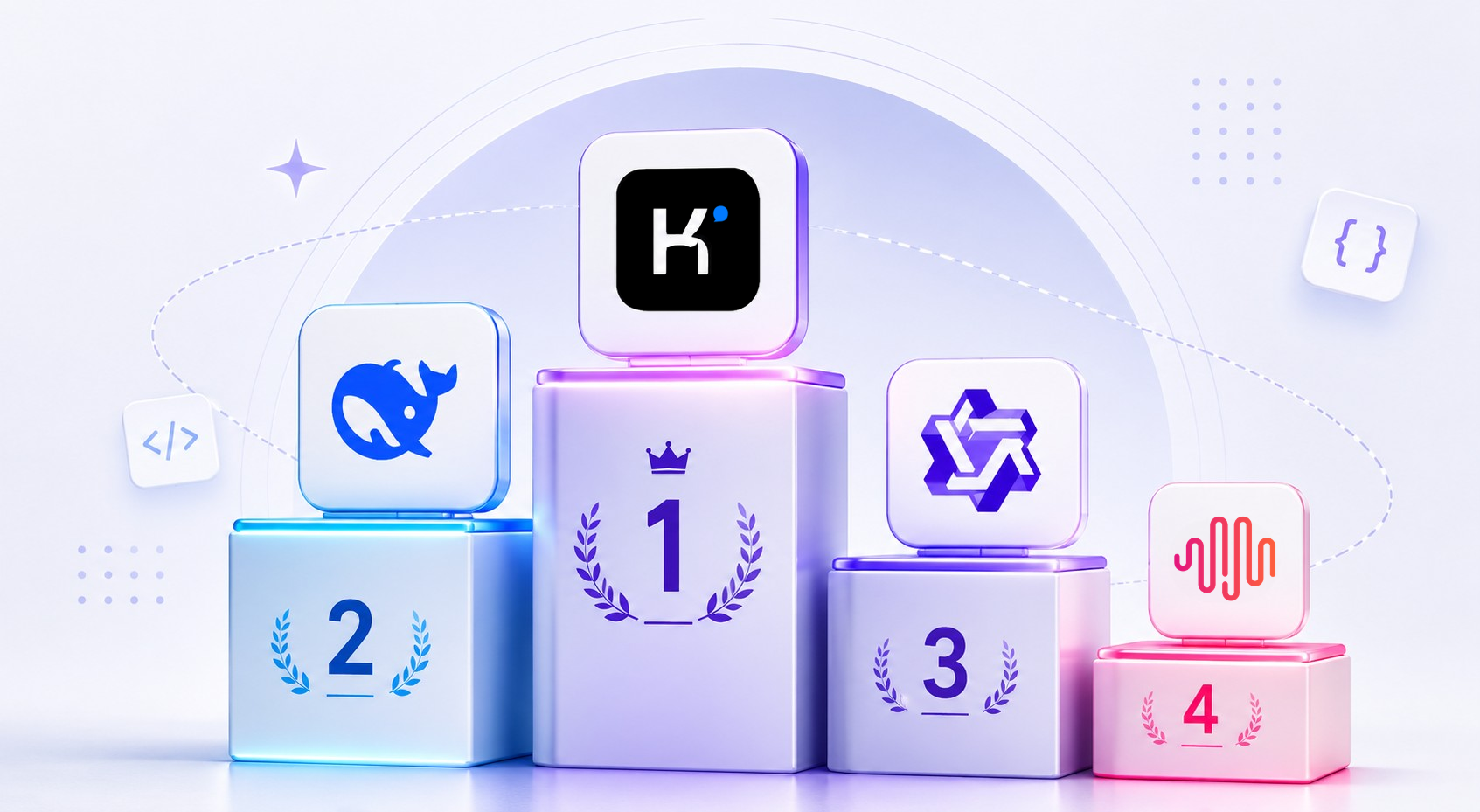
The open-source coding race just lapped the closed frontier on price. Here's how to pick your model
Shubham Tribedi
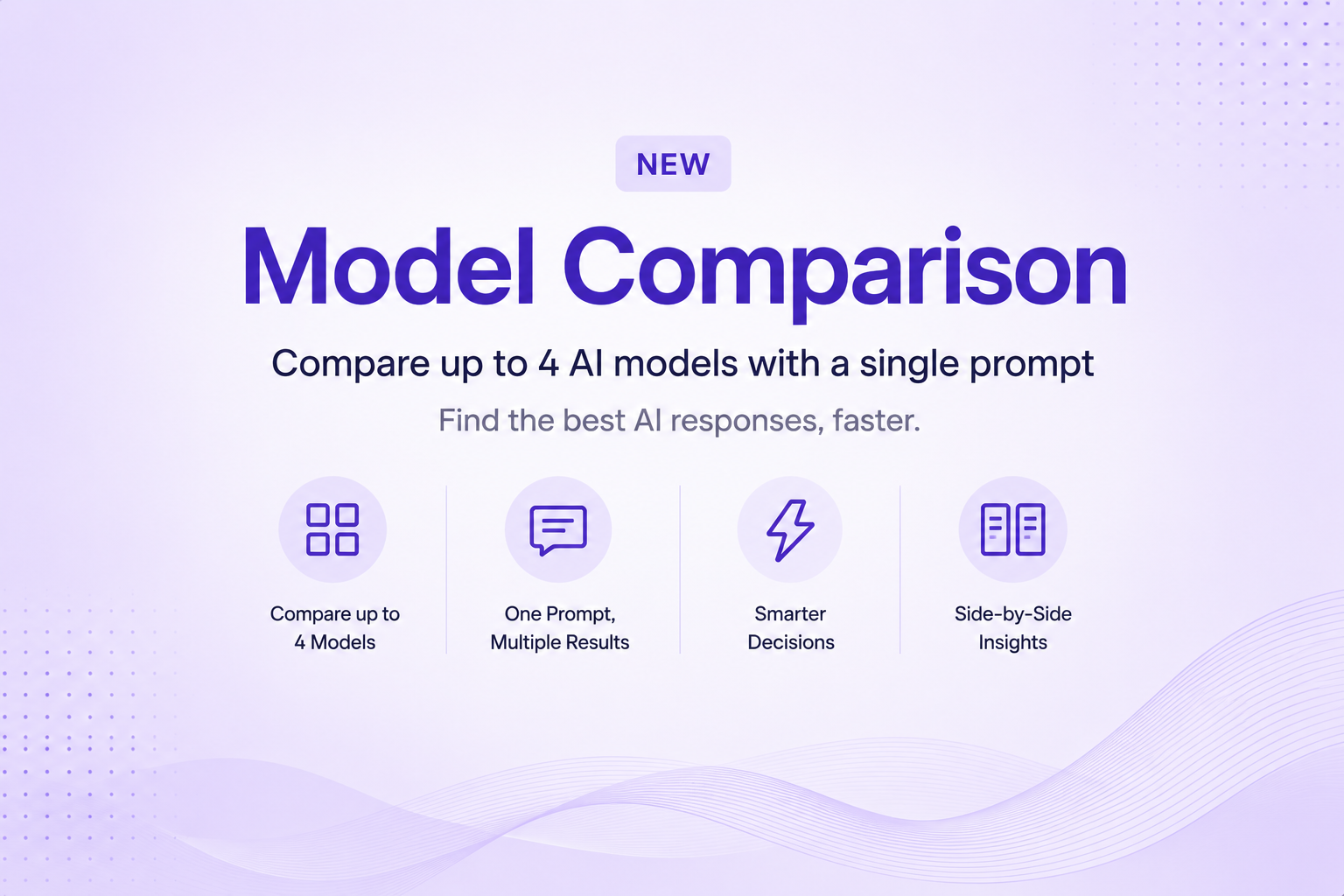
One prompt. Up to four models. Real-time responses, latency, cost, throughput - everything you need to make the right AI decision, finally in one place.
Shubham Tribedi
How to wire up Hermes Agent to production-grade inference in under five minutes - with full model control, transparent costs, and zero lock-in.
Shubham Tribedi
Alibaba's multimodal agent model - vision, deep reasoning, GUI automation, and code generation unified in a single loop - is live on Qubrid AI today.
Shubham Tribedi
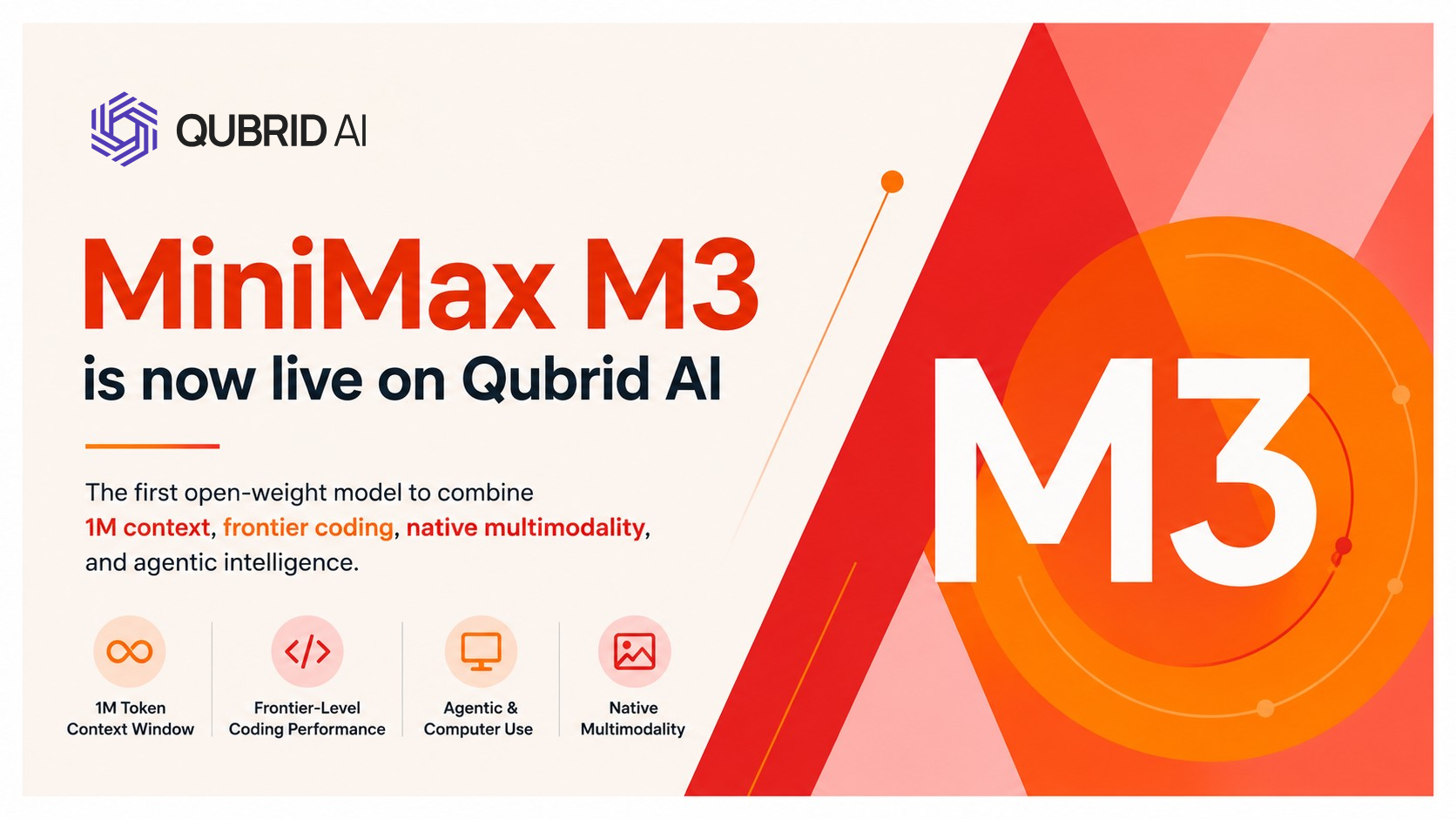
The first open-weight model to combine frontier coding, million-token context, and native multimodality just launched - and you can access it right now.
Shubham Tribedi