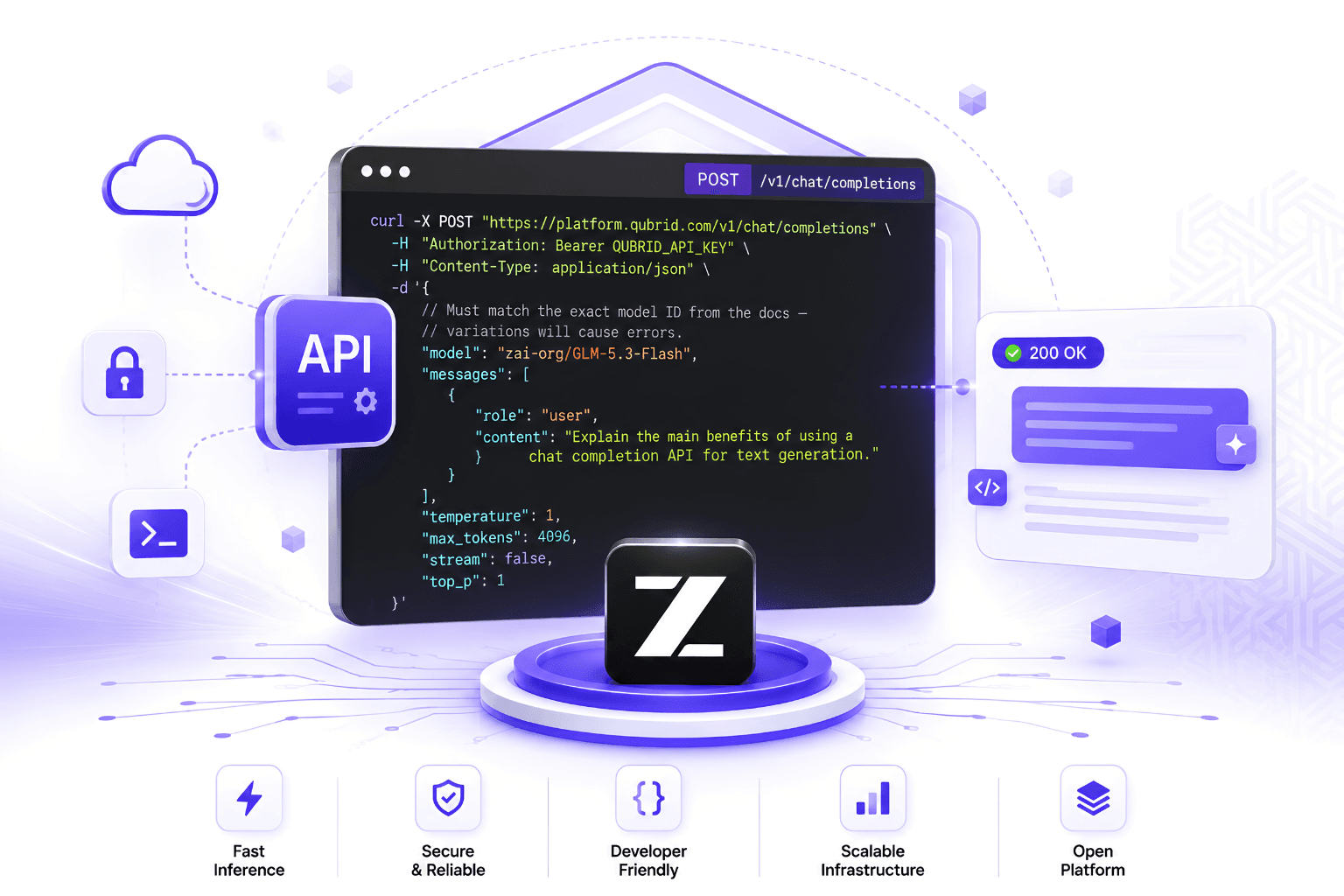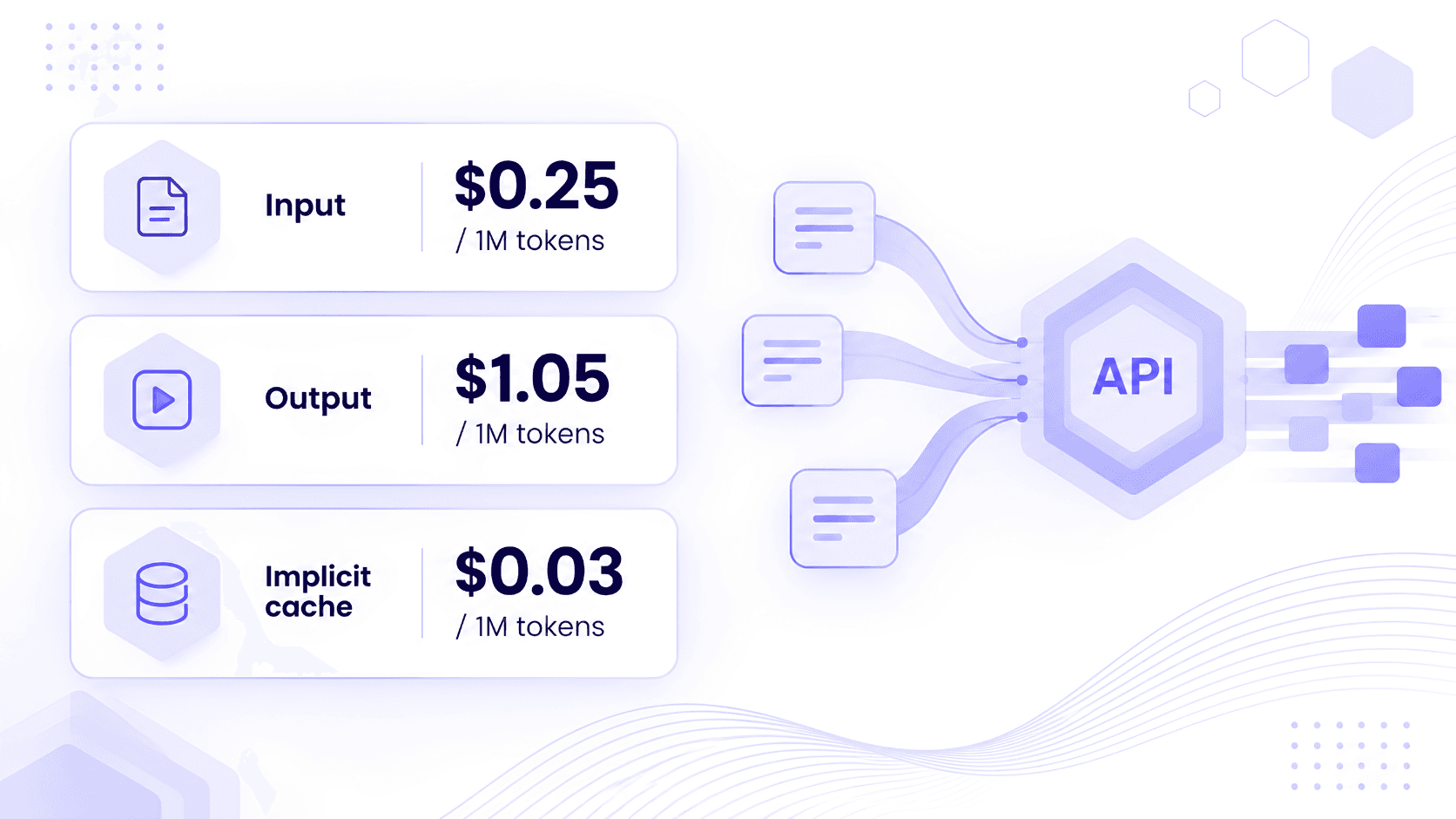
Kimi K2.6 is Moonshot AI's latest open-source model built for long-horizon coding, multimodal input, and agent swarm workflows. And the easiest way to access it via API right now is through Qubrid AI, which gives you instant serverless access without touching any GPU infrastructure.
QubridAI
You're building something that matters. Maybe it's an autonomous coding agent, a document-heavy RAG pipeline, or a multi-step workflow that needs to think before it acts. You've heard the buzz around Alibaba's Qwen3.6 family two models, same lineage, very different personalities. Here's the uncomfortable truth: picking the wrong one won't just cost you benchmark points. It'll cost you latency, money, and in some cases, the quality ceiling your product actually needs.
QubridAI
Most open-source AI releases ask you to make a trade-off: raw power or practical speed. DeepSeek's V4 series refuses that bargain. With two models one built for scale, one built for velocity and a shared architecture that supports a full **one million token context window**, the DeepSeek-V4 series is one of the most thoughtfully designed open-weight releases to date. Whether you're building latency-sensitive applications or tackling complex agentic workflows, there's a V4 model designed for exactly what you need.
QubridAI
Most AI pipelines are a mess of duct tape. You have one model handling vision, another transcribing audio, and yet another stitching it all together, each hop adding latency, complexity, and cost. If you've built anything resembling an agentic system lately, you've felt this pain firsthand.
QubridAI
If you’ve been waiting for a model that doesn’t make you choose between speed and intelligence, DeepSeek V4 Flash might be exactly what you’ve been looking for. Built on the same architectural lineage as DeepSeek V3 and the newly released DeepSeek V4 Pro, V4 Flash is optimized for developers who need rapid, reliable responses without sacrificing reasoning depth. It’s lean, it’s quick, and it’s now available on Qubrid AI.
QubridAI
The open-source leaderboard just got reshuffled again. DeepSeek-V4-Pro, the latest flagship from DeepSeek AI, has arrived with a claim that's hard to ignore: 1.6 trillion parameters, a 1 million token context window, and benchmark numbers that rival the best closed-source models on the planet. For developers who care about what's actually happening at the frontier of open-weight AI, this one deserves a close look.
QubridAI
A 27-billion parameter model that beats 400B-class systems on coding benchmarks shouldn't exist. Qwen3.6-27B does. Alibaba's Qwen team just released the first open-weight model from the Qwen3.6 series, and it's turning heads for one reason: a compact dense model is now outperforming much larger Mixture-of-Experts systems on the benchmarks that developers actually care about real-world software engineering, agentic coding, and frontier-level reasoning. No MoE routing overhead, no inflated parameter budgets. Just 27B dense parameters, a rethought hybrid architecture, and a 262K token native context window.
QubridAI
What if your AI agent could spend 13 hours autonomously rewriting the core of a financial matching engine, making 1,000+ tool calls, analyzing CPU flame graphs, and delivering a 185% throughput improvement without a single human intervention?
QubridAI
Large language models are moving fast. But every so often, a release lands that feels genuinely different not just an incremental tuning run, but a step up in what's actually possible. Qwen3.6-Max-Preview, released by Alibaba on April 20, 2026, is one of those releases.
QubridAI
The landscape of Anthropic's model lineup shifted meaningfully twice in early 2026. First, Claude Sonnet 4.6 launched in February 2026 as the first Sonnet to surpass the prior generation's Opus on coding, redefining what a mid-tier model could do. Then, Claude Opus 4.7 arrived in April 2026 as a notable improvement on Opus 4.6 in advanced software engineering, with particular gains on the most difficult tasks.
QubridAI
Anthropic released Claude Opus 4.7 on April 16, 2026 just 70 days after Opus 4.6 shipped on February 5. Both models carry the same $5/$25 per million token pricing. Both are positioned as the company's most capable generally available model for complex reasoning and agentic coding. So what actually changed, and does it matter for your production workloads?
QubridAI
There is a particular failure mode that shows up in production AI systems working on hard problems: the model gets partway through a complex task, loses the thread, and produces something plausible but wrong. You catch it in review, adjust the prompt, and try again. Multiply that by the hardest 20% of your engineering backlog, and you have a significant drag on development velocity.
QubridAI